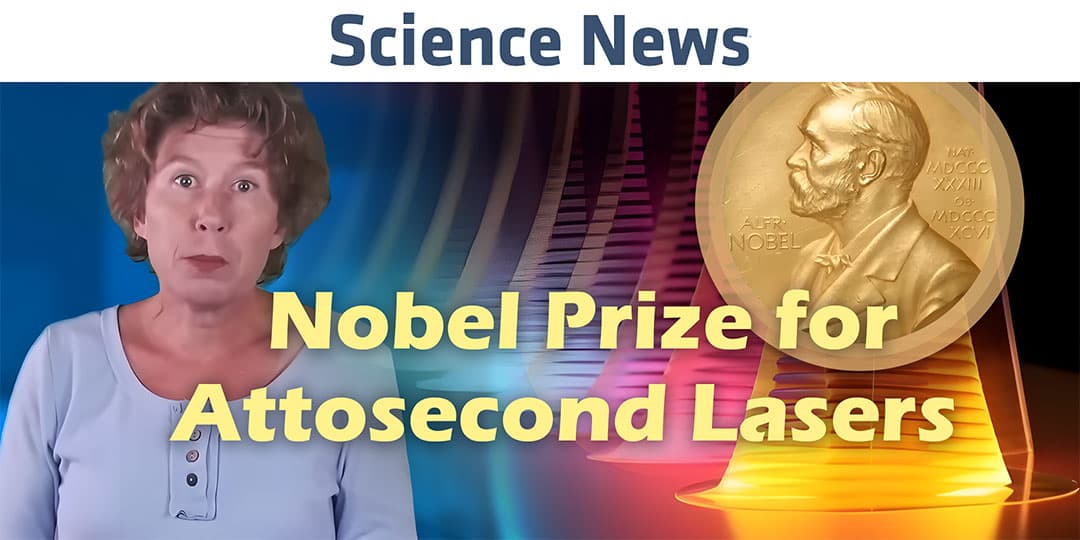
Nobel Prize in Physics 2023: What Are Attosecond Lasers Good For?
About this video
In this video Sabine Hossenfelder delves into the world of science, starting with the celebration of attosecond physics, which has been honored with the Nobel Prize in Physics for 2023. This groundbreaking research could pave the way for faster computers in the future. However, the scientific community isn't without its controversies. Ranga Dias, who claimed to have developed a room temperature superconductor, finds himself amidst retractions and allegations of academic misconduct. The debate around consciousness is also heating up, with the Integrated Information Theory (IIT) at its center. While some argue it's been given undue attention, others see its merit. In the realm of particle physics, CERN's ALPHA collaboration has made a significant revelation: antimatter doesn't exhibit anti-gravitational properties. Meanwhile, the U.S. Department of Energy and Stanford University have unveiled the world's most powerful x-ray laser, promising a myriad of scientific applications. In a twist, scientists have also discovered a method to make sand defy gravity and flow uphill. The possibility of life on other planets is explored, suggesting life might arise differently elsewhere in the universe.
Original source