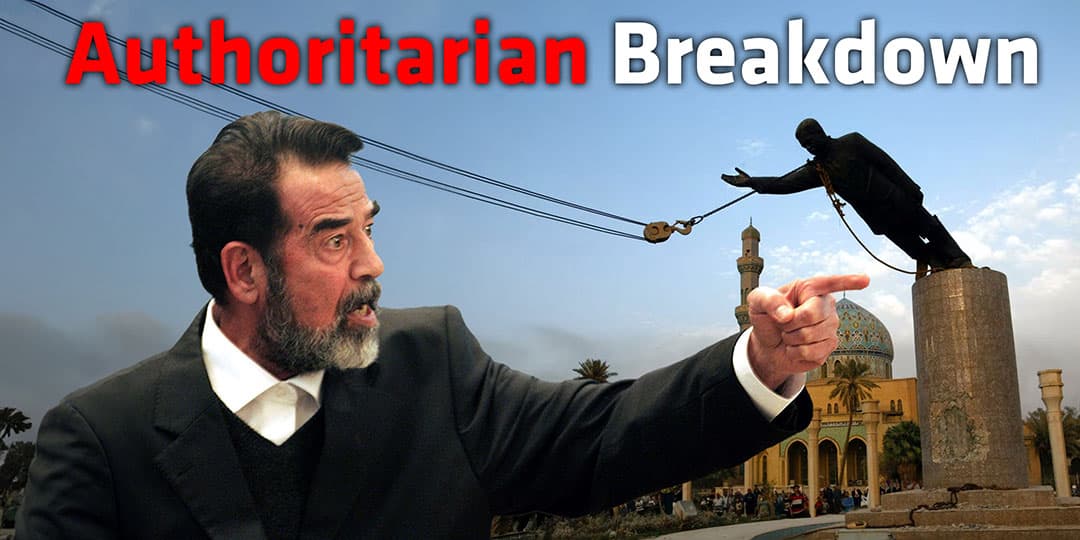
Authoritarian Breakdown
About this video
"The term 'dictator' is frequently heard these days in the media covering global revolutions. Originally, a dictator was an official in ancient Rome, entrusted with full authority during times of crisis. During this period, an individual would assume complete control over the government and military for a limited time, usually six months. Therefore, Roman dictatorship was a form of legal authority. However, towards the end of the Roman Republic, military commanders who seized power through illegitimate means also claimed this title, leading to an unlawful form of dictatorship. Sulla and Julius Caesar removed the limitations on dictatorship and ruled autocratically. Since then, a dictator has been defined as someone who, without holding a royal title, rules a state with absolute authority and without legal constraints.
Dictatorship is a form of authoritarianism that may possess several of the following characteristics:
1- The absence of any law or tradition that restricts the actions of rulers, or cases where the ruler has suppressed these limitations through their unlimited power.
2- Seizing governmental power by breaking existing laws.
3- The absence of rules or laws for succession.
4- Utilizing power for the benefit of a small group.
5- The populace obeying the state's power solely out of fear.
6- The concentration of power in the hands of one individual.
7- The use of terror as the primary means of exercising power.
The key attributes of dictatorship can be summarized as the absoluteness of power, forcibly seizing power, and the absence of regulated rules for succession.
In recent history, dictatorships can be categorized into individual dictatorships (as found in Latin America or Middle Eastern countries) and totalitarian dictatorships."
Original source