Dubbed
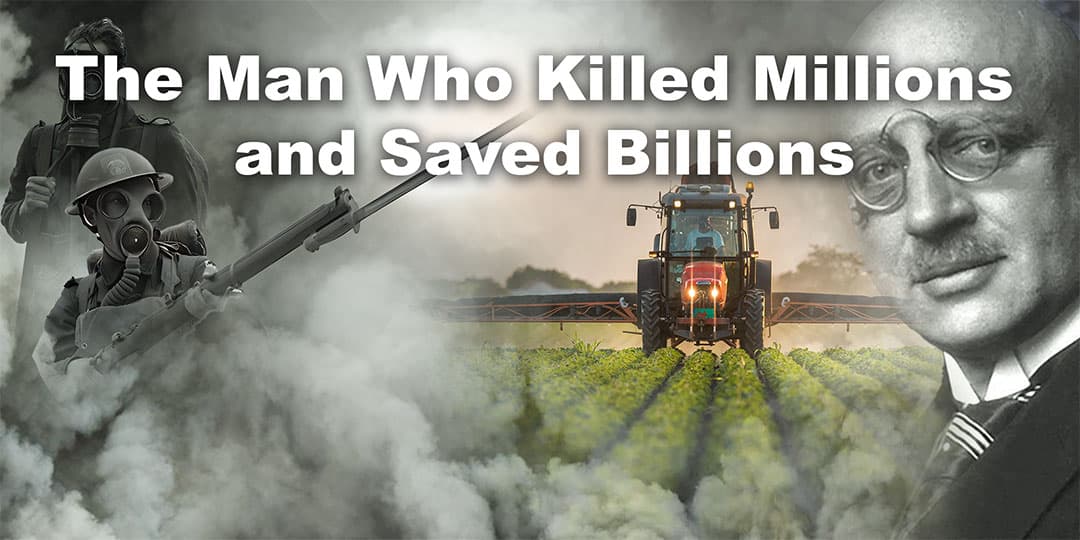
A Man who Killed Millions and Saved Billions
About this video
Fritz Haber's contributions to science and industry indeed have had a profound and lasting impact on modern society. His invention of the Haber process, together with Carl Bosch, revolutionized the production of ammonia, which is a key component in the manufacture of fertilizers. This innovation significantly enhanced agricultural productivity and is often credited with averting global famine, thereby saving countless lives.
On the other hand, Haber's work during World War I on chemical warfare, particularly the development and deployment of chlorine gas, has cast a dark shadow over his legacy. His efforts in this regard led to the suffering and death of many individuals on the battlefield.
The dual nature of Haber's legacy—both as a savior through his agricultural advancements and as a harbinger of death through his chemical warfare contributions—reflects a complex and multifaceted impact on the world. His story is often cited as a poignant example of the potential for both good and ill inherent in scientific discovery and technological innovation.
While the figure of 4 billion people saved is often mentioned in discussions of Haber's impact, it's a rough estimation of the number of lives sustained by the increased food production enabled by synthetic fertilizers. It's challenging to quantify precisely the number of lives saved by Haber's contributions to ammonia synthesis and, by extension, to agriculture.
The dichotomy of Fritz Haber's legacy continues to serve as a topic for reflection and discussion on the ethical implications and human cost associated with scientific and technological advancements.
Original source