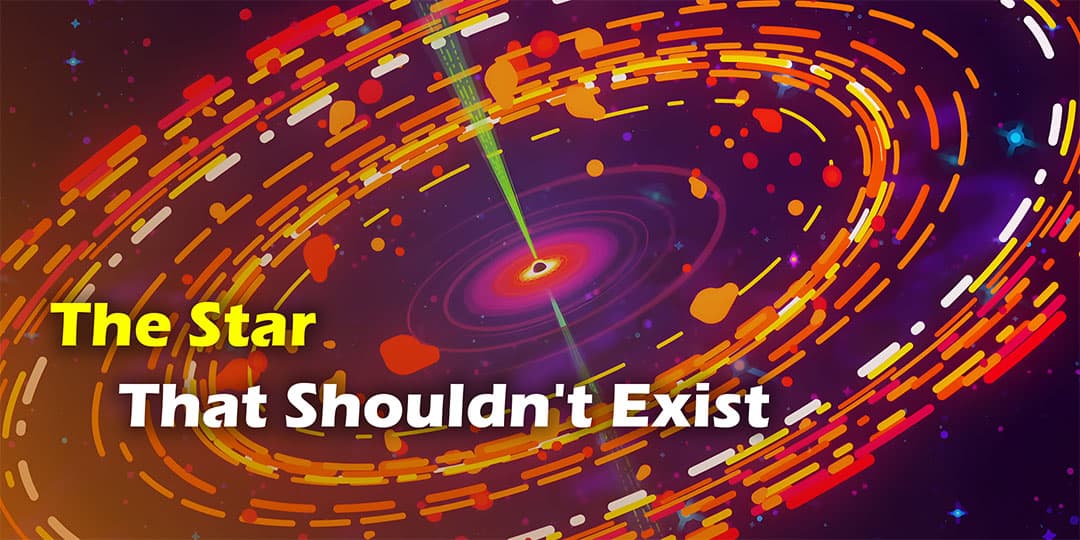
Black Hole Star - The Star That Shouldn't Exist
About this video
In the vast expanse of the universe, there once existed colossal entities known as black hole stars. These celestial giants, believed to be the largest stars ever, shone brighter than entire galaxies, dwarfing any star we know of today. Their uniqueness lay deep within them, where a cosmic parasite, an insatiable black hole, resided. This phenomenon challenged our understanding of star formation and growth. These stars could only emerge during a brief period in the early universe, and their existence might hold the key to unraveling one of cosmology's greatest mysteries.
As they formed, these stars, composed almost entirely of hydrogen, would typically disperse the gas clouds that birthed them. However, the early universe's gas clouds were so dense that they continued to feed the young star, causing it to grow to unimaginable proportions. Eventually, the star's core would collapse into a black hole. But rather than signaling the star's end, it continued to thrive with this black hole at its heart. Over time, the black hole consumed the star from within, growing hotter and expanding the star in the process. In their final stages, these black hole stars spanned a size more than 30 times our solar system.
The existence of these black hole stars could potentially explain the supermassive black holes we observe in galaxies today. As we peer into the universe with tools like the James Webb Space Telescope, we hope to catch a glimpse of these magnificent giants, shedding light on their brief existence between formation and destruction.
Original source