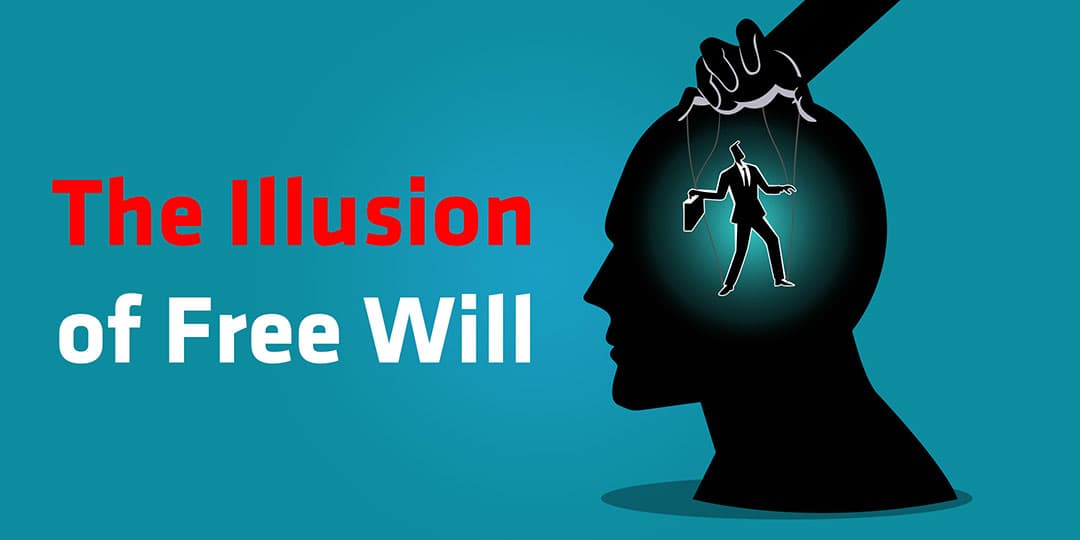
The Illusion of Free Will
About this video
The video titled "The Illusion of Free Will" by the channel "Aperture" delves into the concept of free will and questions its existence. Here's a summarized breakdown of the video's content:
1. **Introduction to Free Will**: The video starts with a simple choice between an apple and a banana, suggesting that whichever one you pick is a result of your free will. However, it challenges this notion by asking if your choice would remain the same if the scenario was repeated under the exact same circumstances.
2. **Scientific Studies**: The video references studies from the 1980s where Benjamin Libet used an EEG to show that one can predict a person's movement 300 milliseconds before they consciously decide to move. Another study using fMRI showed that one can predict which button a participant would press 7-10 seconds before they consciously made that decision.
3. **Influence of External Factors**: The video discusses how upbringing, society, and even genetics play a significant role in our decision-making process. It mentions Charles Darwin's theory of evolution and how intelligence, which aids decision-making, can be hereditary.
4. **Brain Tumors and Behavior**: The video cites cases where individuals developed pedophilic tendencies due to brain tumors. Once the tumors were removed, their behavior normalized. This raises questions about the nature of free will and how physical changes in the brain can drastically alter behavior.
5. **Legal Implications**: The video touches upon how MRI scans are being used in legal cases to argue that individuals with brain malfunctions or tumors should not be held fully responsible for their actions.
6. **Determinism vs. Fatalism**: While some might view the lack of free will as a reason to believe in fatalism (the belief that all events are predetermined and inevitable), the video promotes determinism, which suggests that while events are predetermined, they are based on prior causes.
7. **Moral Implications**: The video questions the foundations of morality if free will doesn't exist. It also discusses the societal implications of widespread acceptance of the absence of free will.
8. **Illusionism**: The video concludes with the concept of illusionism, suggesting that while free will might be an illusion, it's beneficial for society to act as if it's real.
9. **Closing Thoughts**: The video encourages empathy and humility, understanding that many factors beyond one's control influence life outcomes. It ends with a promotion for Brilliant, an educational platform.
In essence, the video challenges traditional notions of free will, presenting scientific, moral, and philosophical arguments to suggest that our choices might be more predetermined than we think.
Original source